


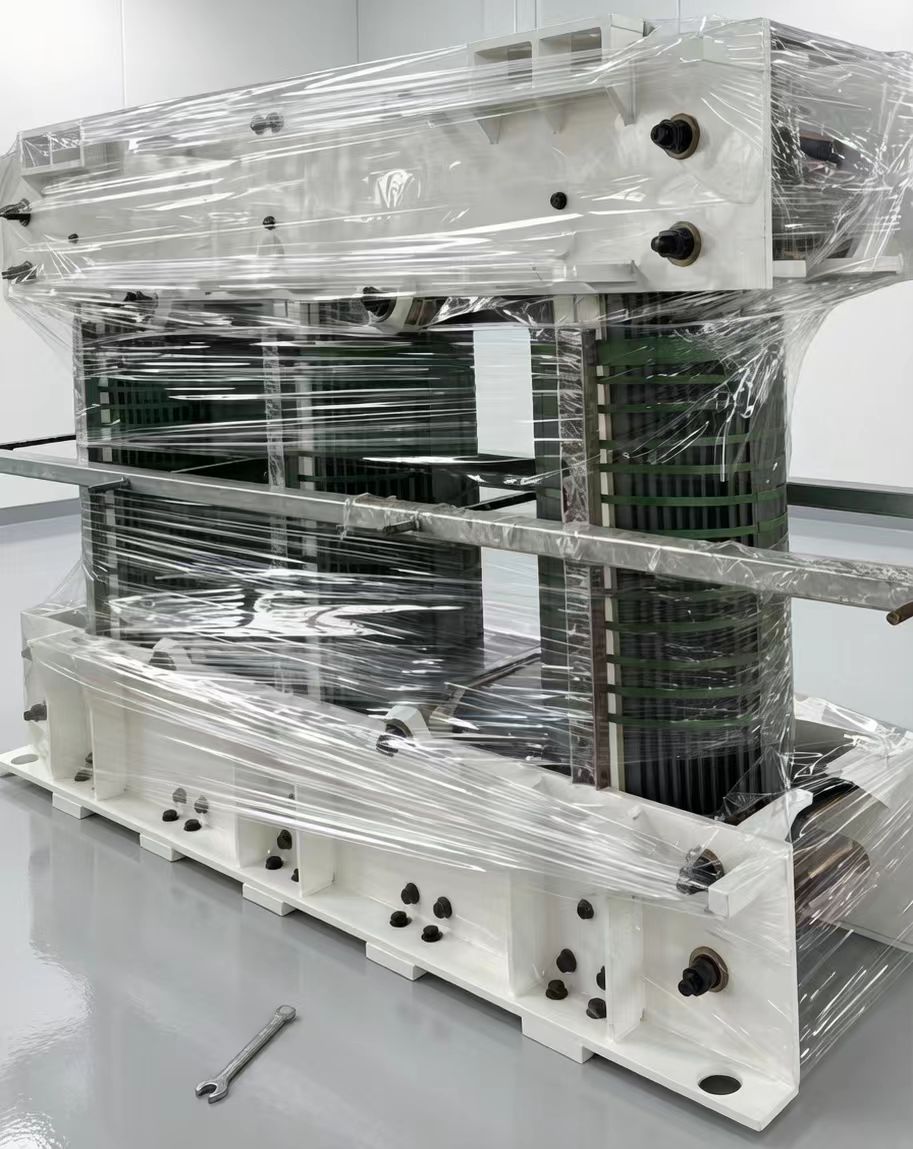
Grain-Oriented Electrical Steel (GOES): Locking Magnetic Flux in the Rolling Direction
Every bit of GOES/CRGO value rides on the rolling direction. This guide maps the selection boundaries between GOES, NGOES, and amorphous alloy, compares 0.18–0.35 mm grades with 20-year no-load loss math, and outlines three non-negotiable checks before ordering: actual MTC values, dimensional precision, and coating.
Read more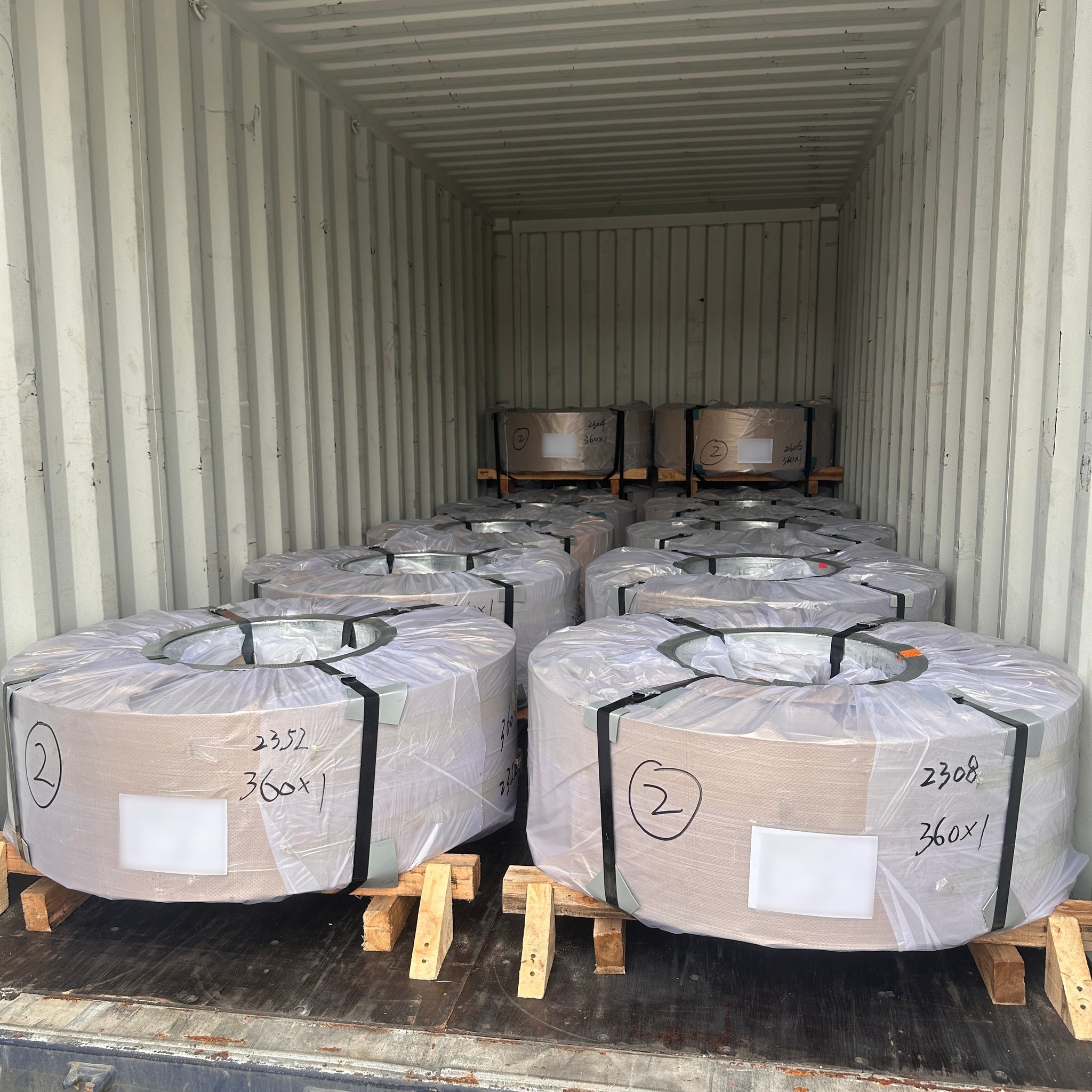
12 coils of 50W800 slit strip to Mundra: a trial order followed by delivery in 40 days
One 20-foot container carried 12 coils of 50W800 non-oriented electrical steel, 0.50 mm × 360 mm, weighing 27.4 t, to Mundra, India. The case covers trial approval, slitting, inspection, packing, loading and documents.
Read more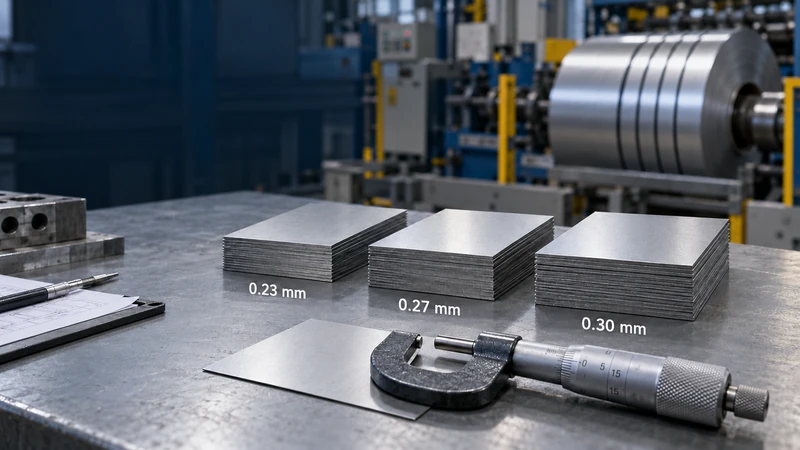
Choosing lamination thickness: 0.23, 0.27 or 0.30 mm is about more than 0.07 mm
Thinner electrical steel cuts eddy-current loss, but it also adds layers, stamping strokes, die wear and stacking-factor loss. How thickness affects core loss, how frequency sets the lower limit, and how to choose between 0.23, 0.27 and 0.30 mm.
Read more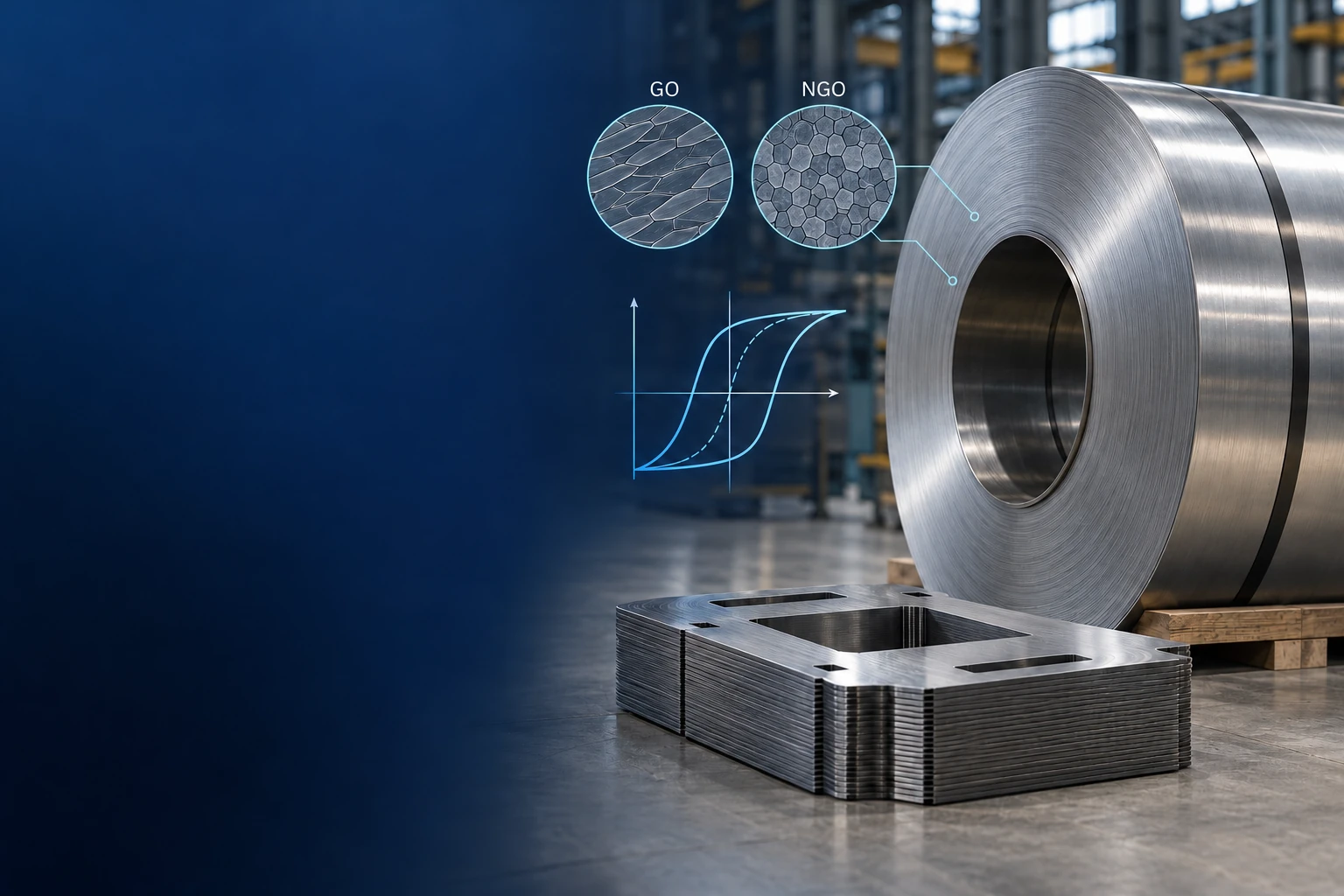
What is an electrical steel coil? GO vs NGO, key properties, and why core loss sets the price
An electrical steel coil is sold for one thing: low loss in an alternating magnetic field. This guide explains how silicon, grain orientation, thickness and coating create that property, how to read a specification sheet, and why core loss decides efficiency, temperature rise and price.
Read more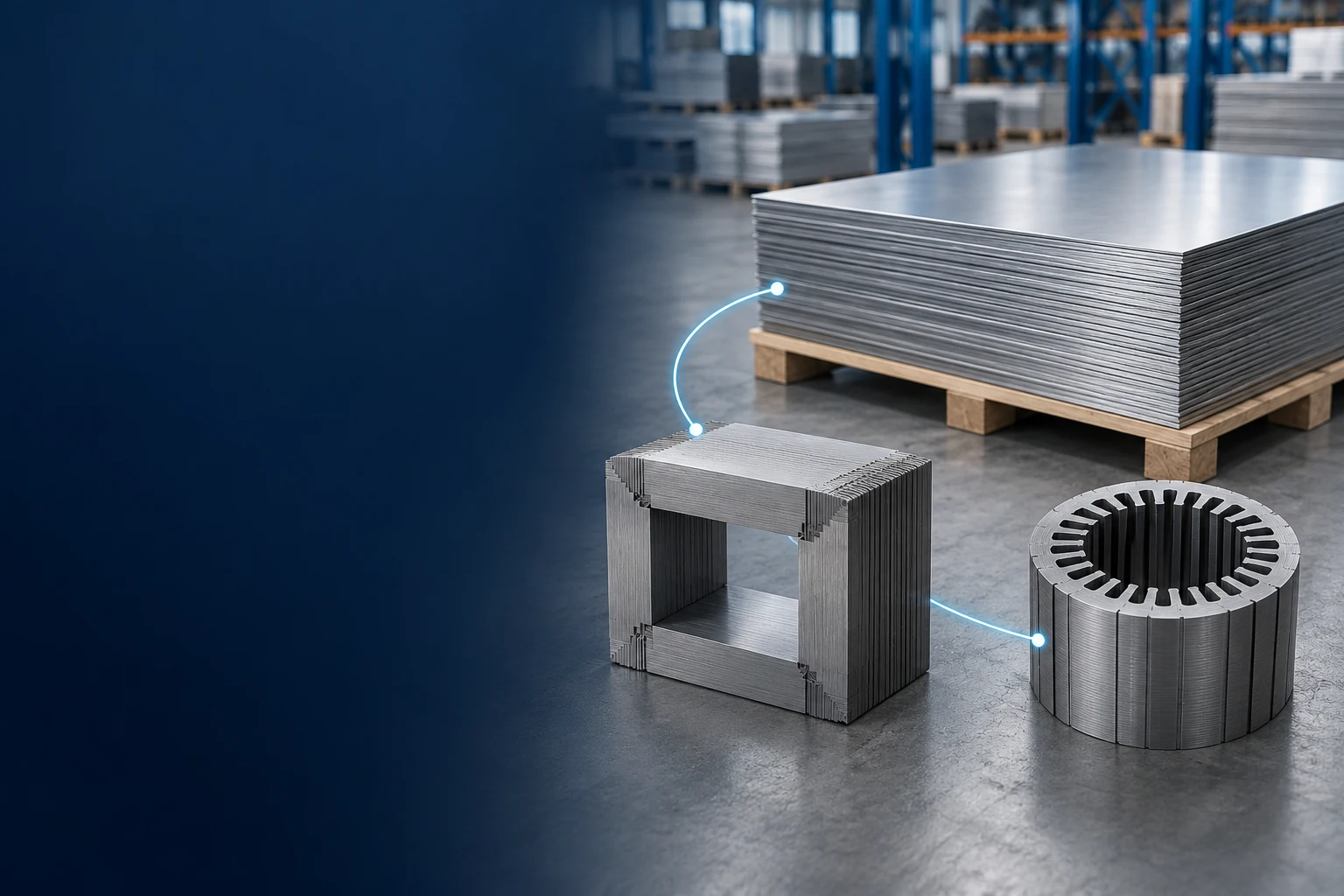
Electrical steel or silicon steel? A complete guide from the name to the finished core
Two names, one family of soft magnetic steel. This guide explains what really separates one sheet from another – silicon, grain orientation, thickness, coating and processing – and how to specify it so that the core performs.
Read more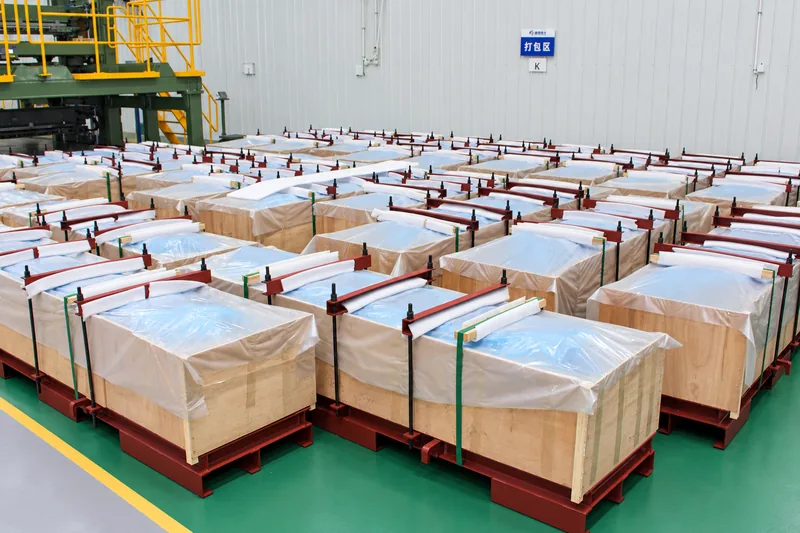
Buying electrical steel for India: BIS rules, Nhava Sheva and Chennai shipping, CIF quotes
CRGO and CRNO imported into India must come from BIS-licensed mills. This guide covers the BIS checks, the matching grades, shipping to Nhava Sheva and Chennai, and what a CIF quotation includes.
Read more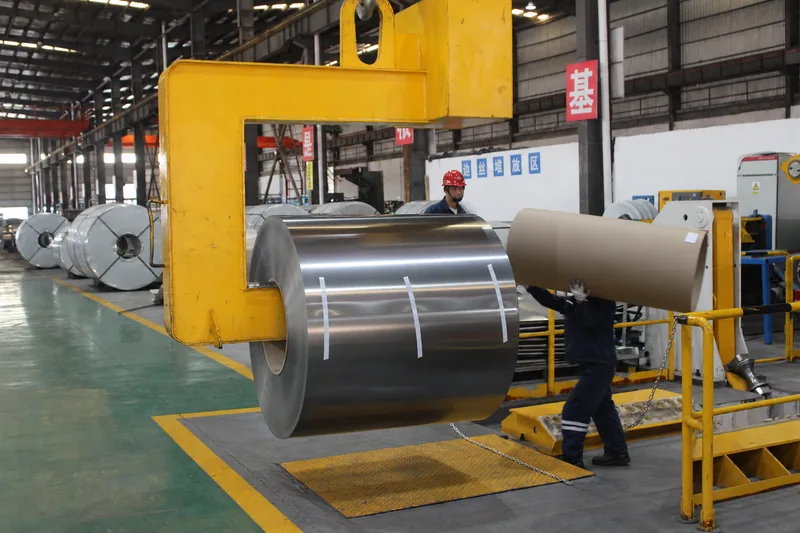
Buying electrical steel for Brazil: grades, duties, shipping to Santos and CIF quotes
How Baosteel grades compare with the AISI M-grades and ABNT references used in Brazil, which anti-dumping duties apply, and how CIF shipments to Santos or Paranaguá are quoted.
Read more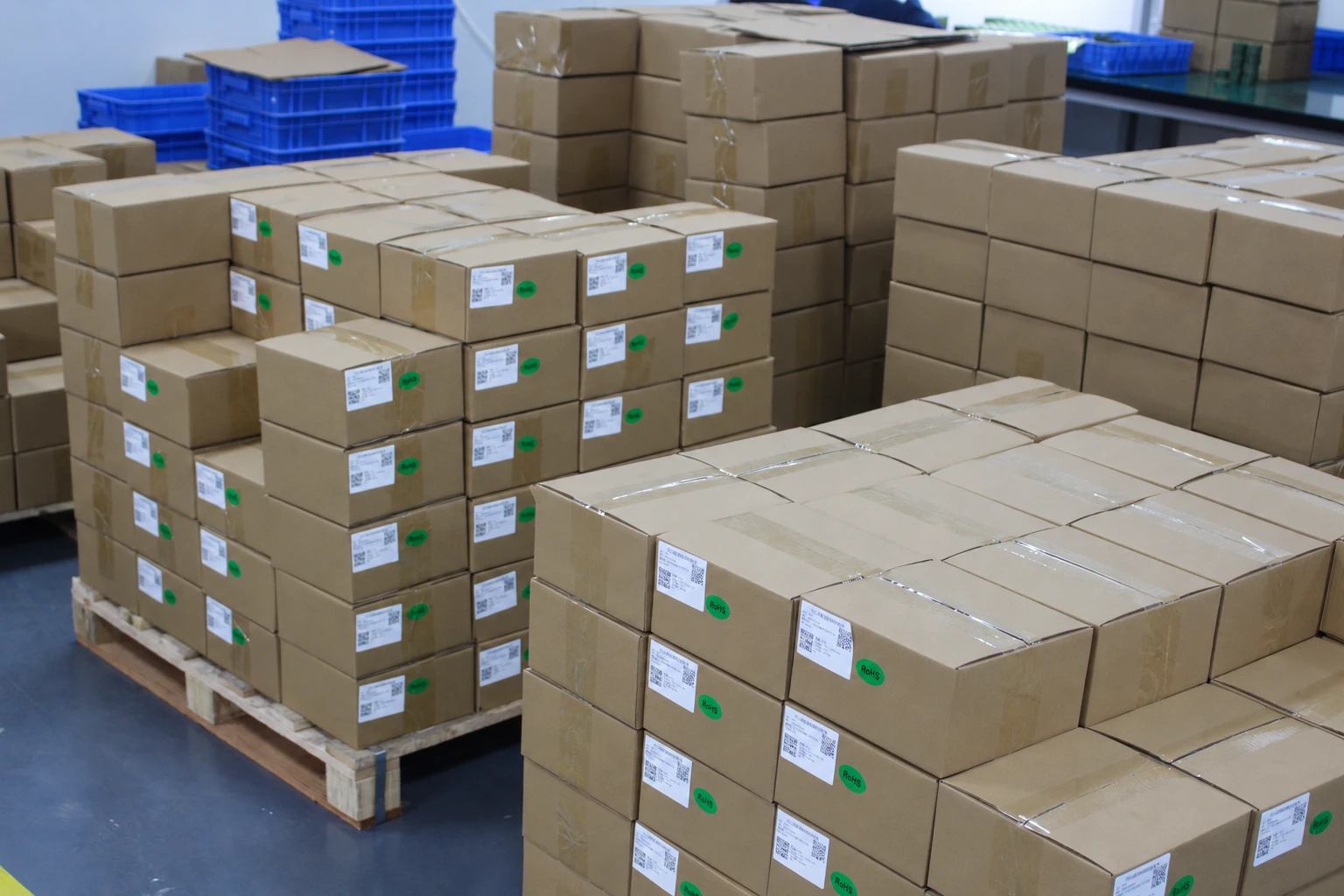
Buying electrical steel for Italy: EN grades, EU duties and CBAM, CIF quotes to Genoa
Italian buyers specify EN 10107 and EN 10106 grades. This guide matches them with Baosteel grades and explains the EU anti-dumping duty on grain-oriented steel, CBAM reporting and CIF quotations.
Read more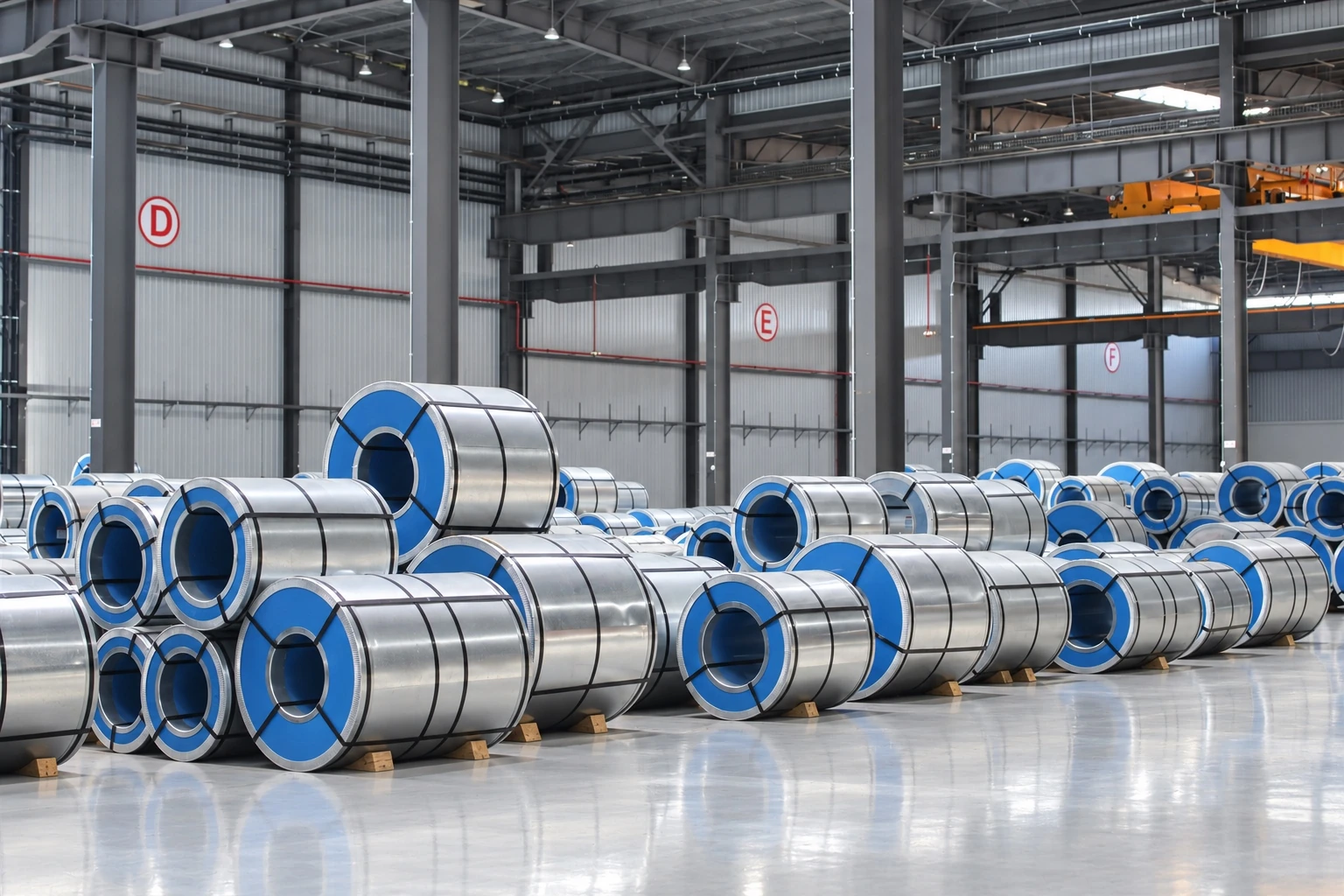
Buying electrical steel for Turkey: TS EN grades, import checks, CIF quotes to Mersin and Istanbul
Turkish buyers use the EN grades adopted as TS EN 10107 and TS EN 10106. Here are the Baosteel equivalents, the import points to check with your broker, and how CIF shipments are quoted.
Read more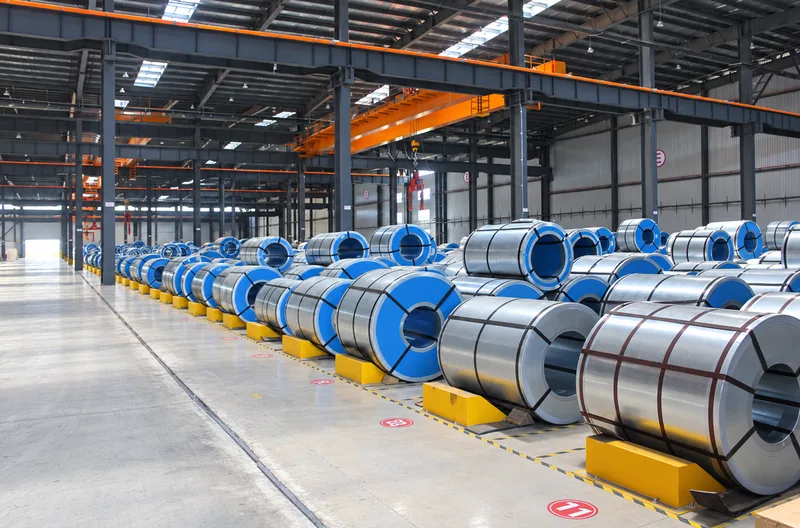
Buying electrical steel for Mexico: ASTM and AISI grades, 2026 tariffs, CIF quotes to Manzanillo
Mexican transformer and motor makers mostly follow ASTM and AISI grades. This guide gives the Baosteel equivalents, the 2026 tariff changes to check, and how CIF shipments to Manzanillo or Lázaro Cárdenas are quoted.
Read more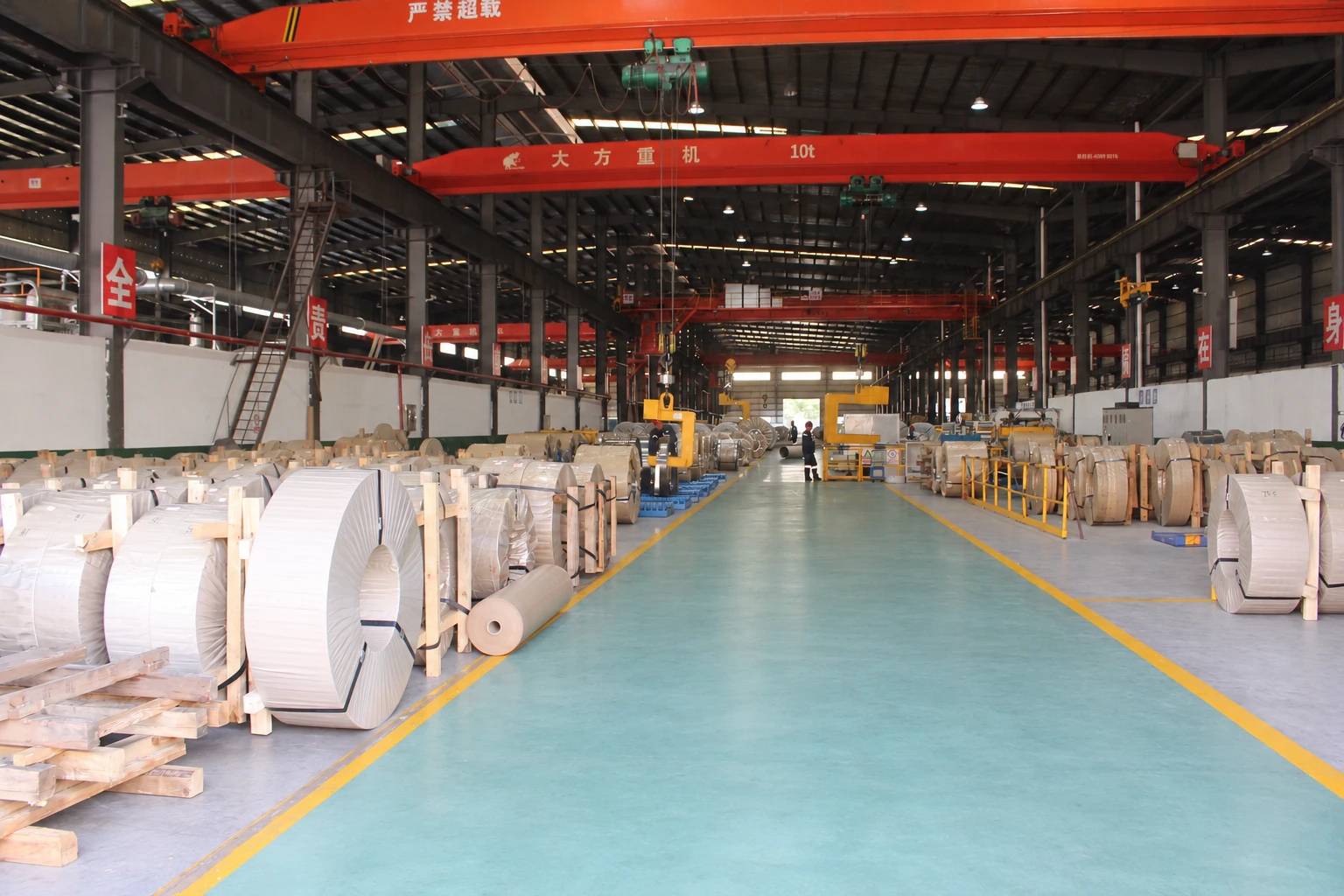
Our stock grade list: 26 popular Baosteel grades and how to request them
We now publish the Baosteel CRGO and CRNGO grades we supply most often. This guide explains what the list shows and what to include in a request so we can confirm stock and quote quickly.
Read more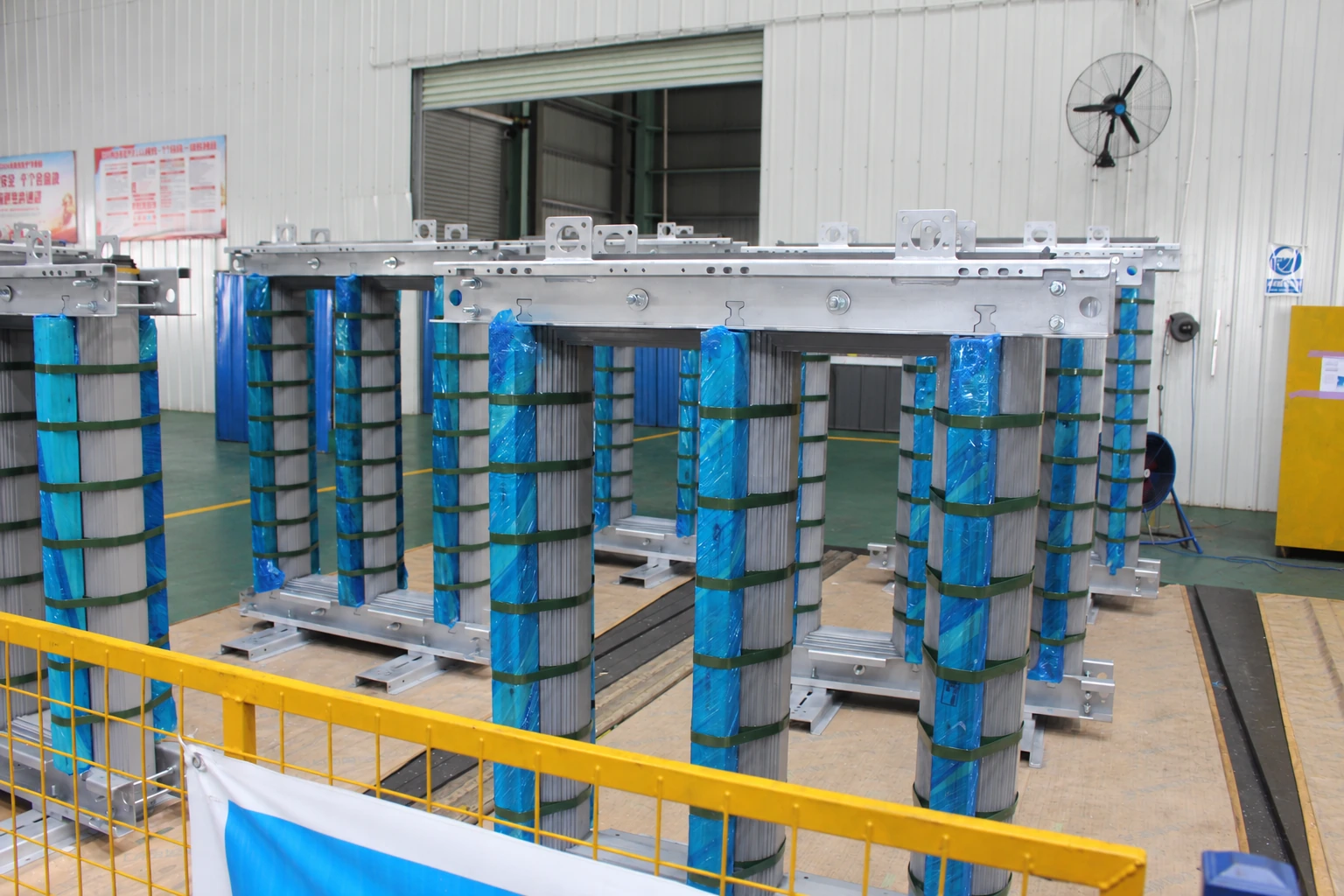
Building factor: why an assembled transformer core loses more than the datasheet says
Mill core loss is measured on single strips under ideal conditions. In a finished core, joints, cutting and clamping add loss. Knowing where it comes from helps designers choose grades and specify processing.
Read more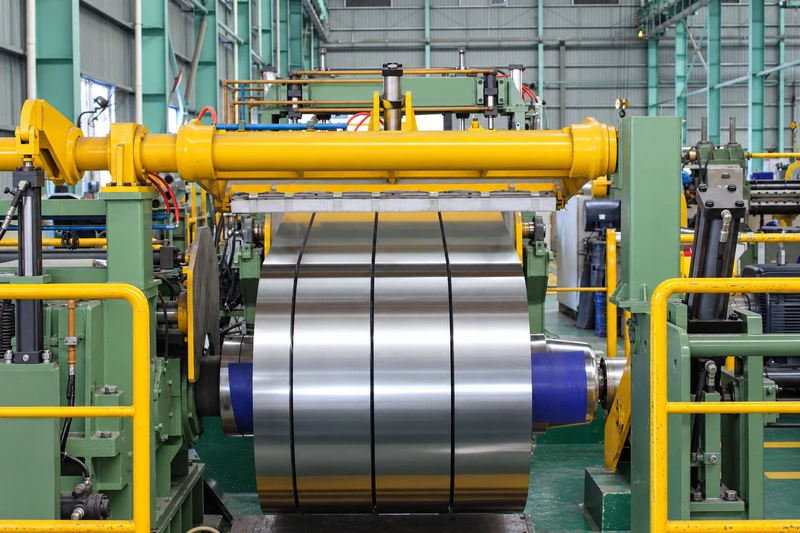
Inside our processing plant: from master coil to finished core
A photo walk through our Hunan processing base: slitting, cutting, high-speed stamping, automated stacking, inspection and packing under one roof.
Read more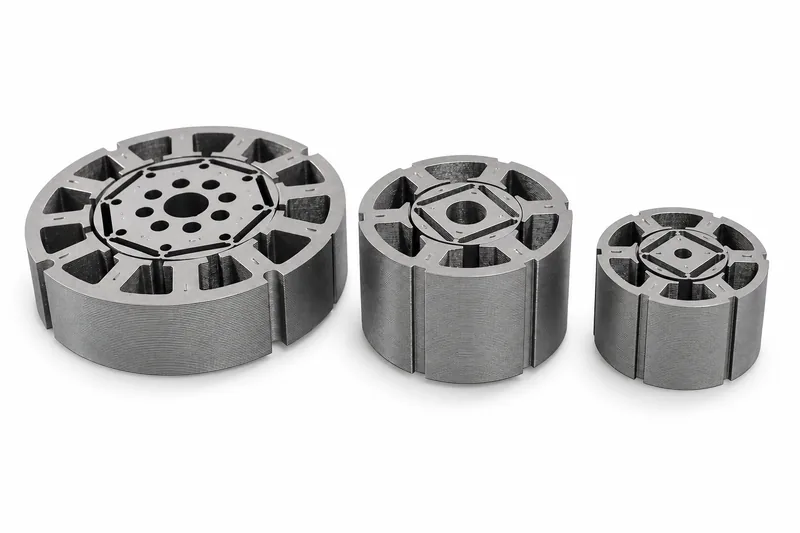
Meeting electrical steel suppliers at a trade show: how to prepare
A twenty-minute meeting at a booth is enough to qualify a supplier, if you bring the right information and ask the right questions.
Read more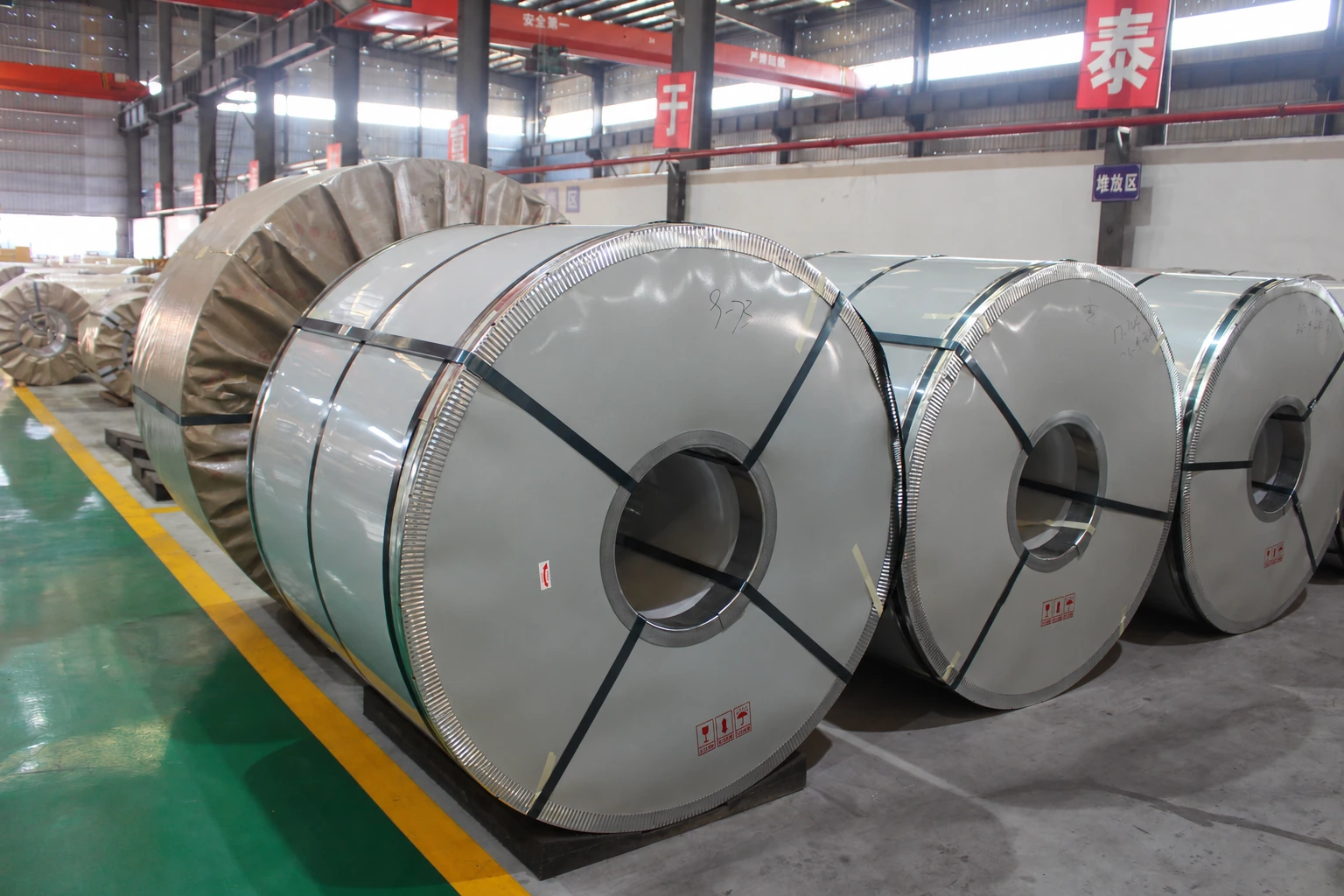
Electrical steel grade equivalents: Baosteel vs Nippon Steel, JFE, POSCO, thyssenkrupp, AK Steel and NLMK
Cross-reference of 28 grain-oriented and 27 non-oriented Baosteel grades with their equivalents at eight mills, with the guaranteed core loss and induction of each grade.
Read more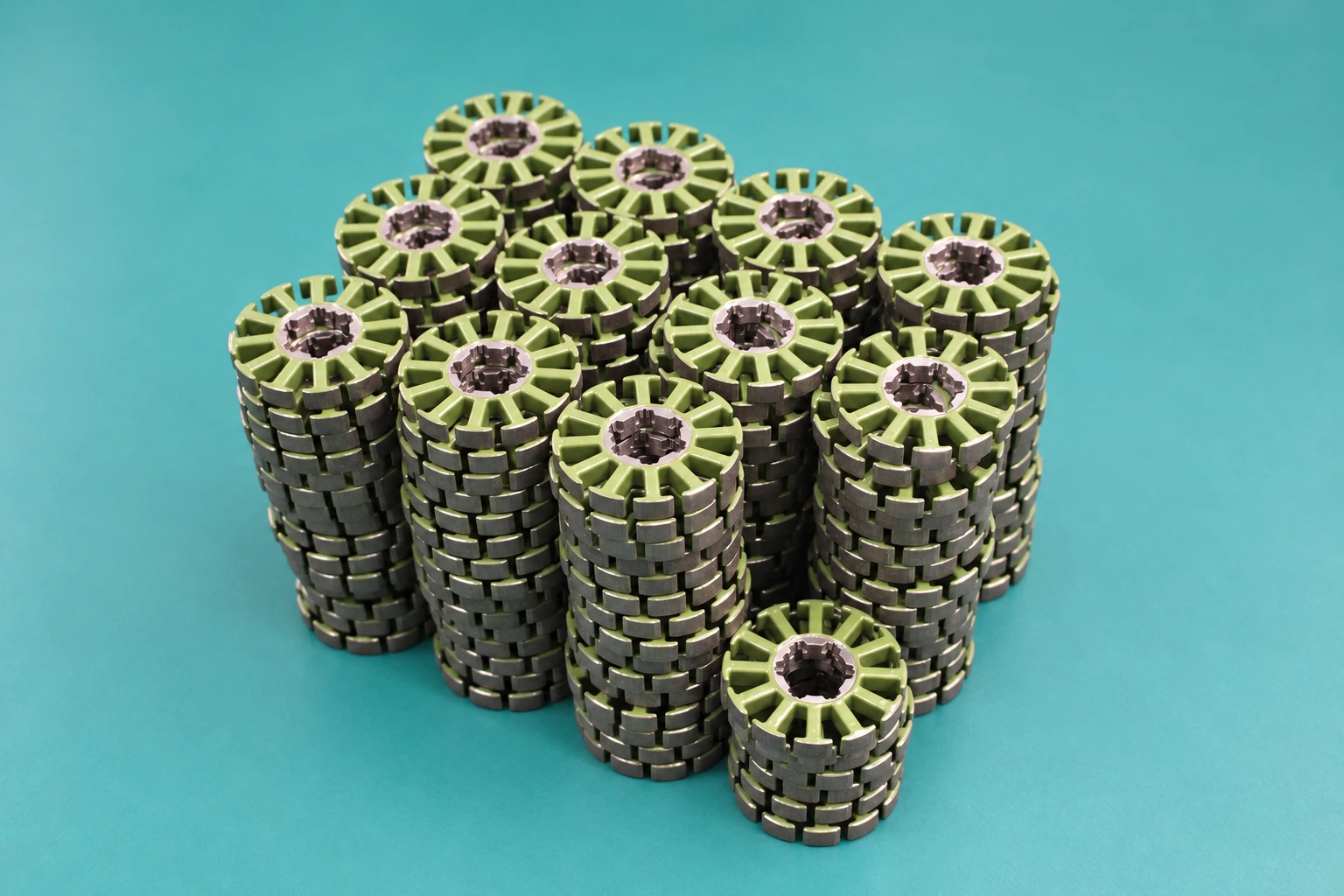
Choosing non-oriented electrical steel for EV and high-efficiency motors
Thickness, core loss and magnetic induction pull in different directions in motor design. A practical guide to the Baosteel A and AH series.
Read moreElectrical steel and transformer exhibitions in 2026: a buyer’s calendar
Three trade shows in 2026 bring together core materials, transformer and motor makers. Dates and venues as published by the organisers, with tips for planning supplier meetings.
Read more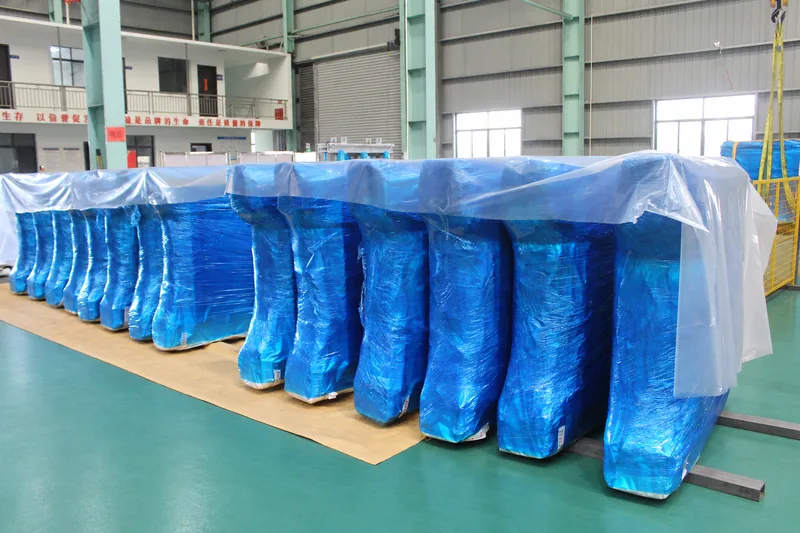
Loading coils and cores into containers: securing, weight and moisture
Electrical steel is heavy, concentrated cargo that is sensitive to moisture. How we plan container loads so that coils and cores arrive flat, dry and undamaged.
Read moreExport packing for electrical steel and cores: pallets, crates and moisture protection
Electrical steel can be damaged by moisture, edge impact and shifting loads. This is how we pack coils, laminations and cores for long transport routes.
Read more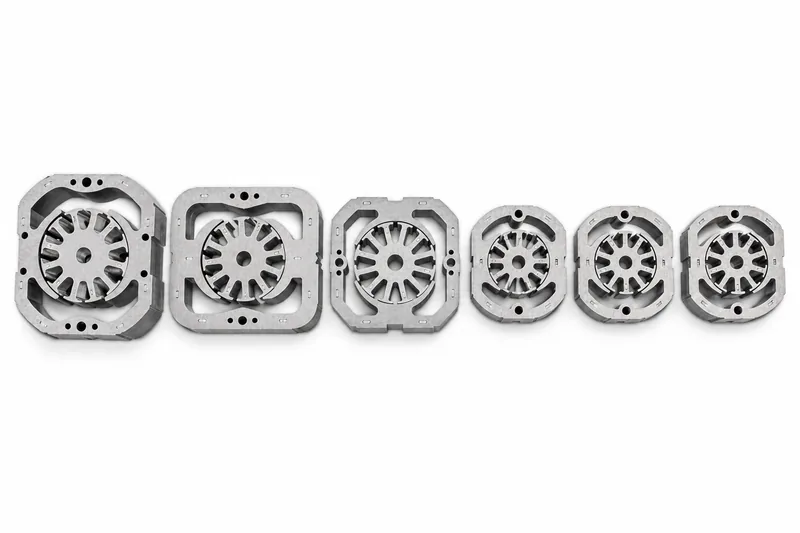
From trial order to supply contract: how a new electrical steel supply is set up
A new supplier relationship works best in stages: samples, a trial lot, then scheduled supply. Here is what happens at each stage and what both sides should agree.
Read more
Measuring motor cores: CMM, vision measurement and height gauges in our quality lab
A stamped and stacked motor core has to meet tight tolerances on bore, slots, stack height and perpendicularity. Here is how we measure them.
Read more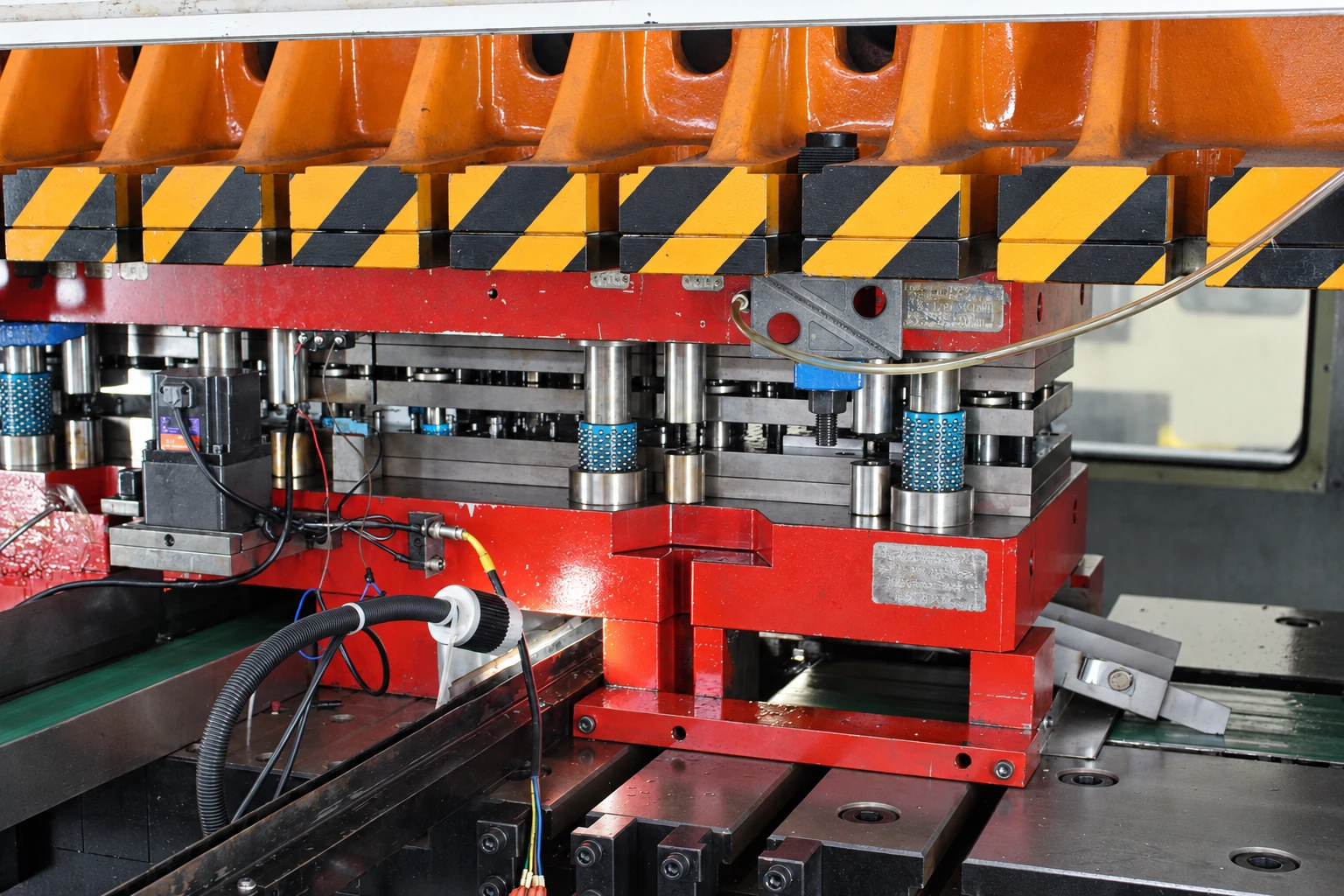
Motor laminations: stamping, interlocking and insulation coating
How slit non-oriented steel becomes stator and rotor cores: progressive-die stamping, in-die interlocking, insulation coating and the checks in between.
Read moreTransformer core stacking: from laminations to a finished three-phase core
How cut laminations become a stacked three- or five-limb core, what we check during stacking, and how finished cores are protected for transport.
Read moreFOB, CFR, CIF or DAP? Choosing Incoterms for electrical steel shipments
The Incoterm decides who books the freight, who insures the cargo and where the risk passes. A practical comparison of the terms most used for coil and lamination shipments from China.
Read more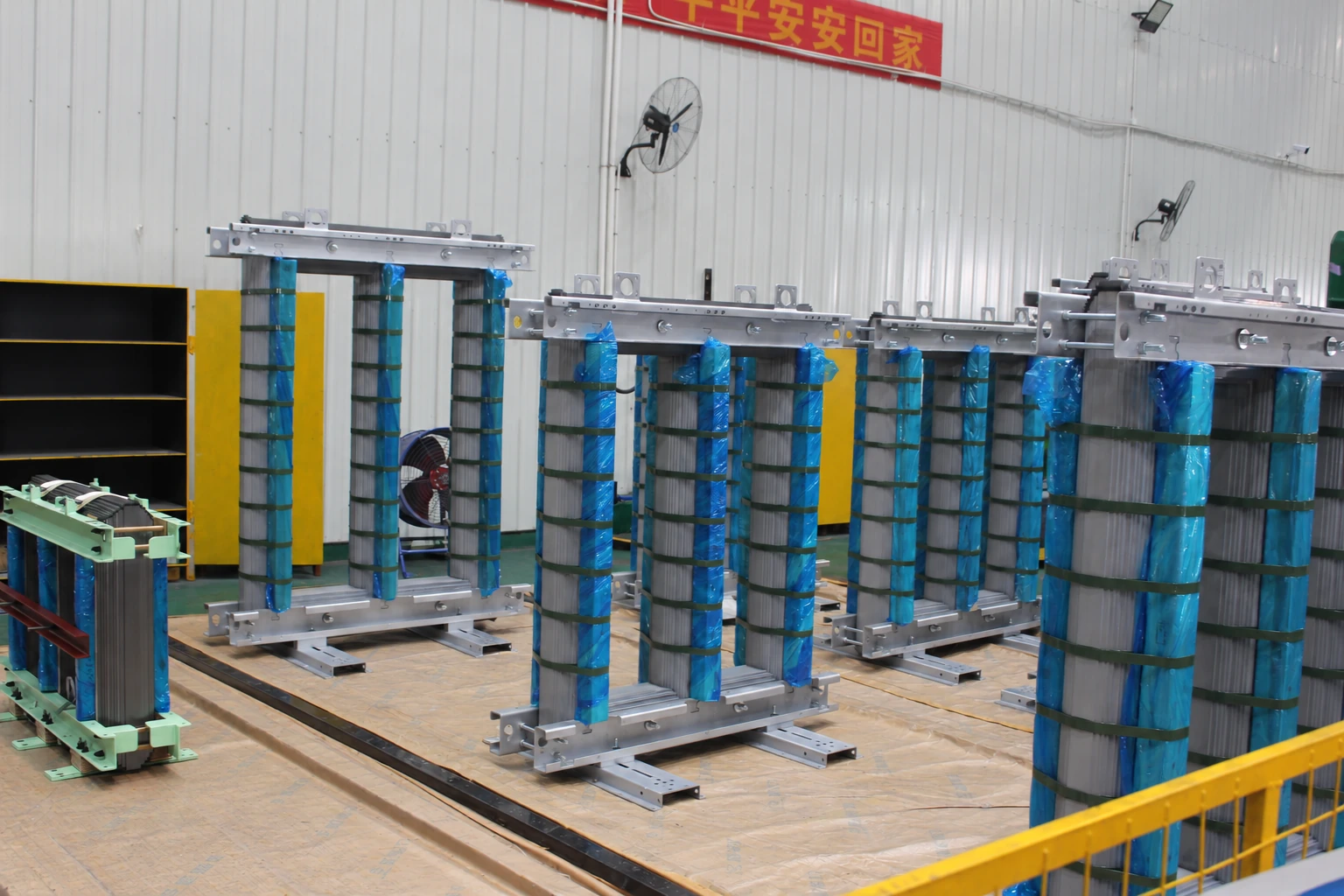
Step-lap cutting for transformer cores: why the joint matters
In a stacked core, the corner joints are where the flux has to leave the rolling direction. Step-lap joints spread that transition over several layers and help keep no-load loss and noise down.
Read more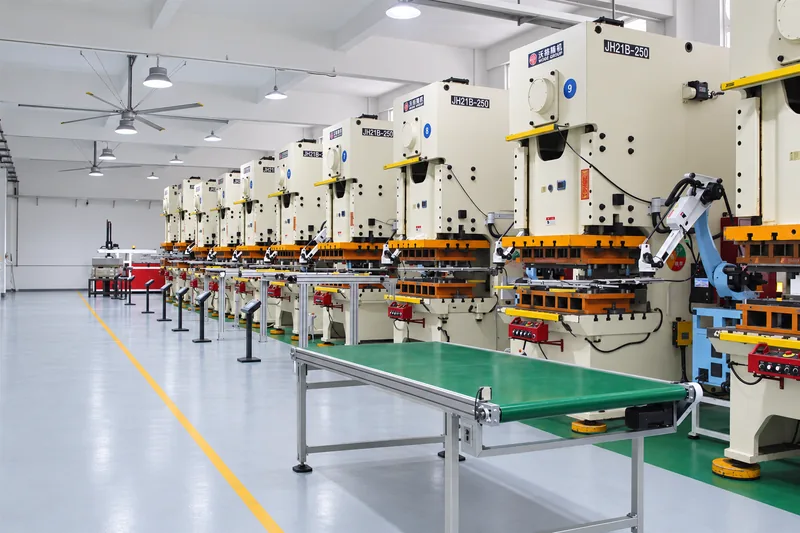
Plant visits and live video audits: see your material being processed
Customers can visit our processing base in person or join a live video walk-through. What a visit covers and how to arrange one.
Read moreIncoming coil inspection and storage: what we check before processing
Every coil that enters our plant is checked against its certificate, identified and stored so that its data can be traced to the finished part.
Read more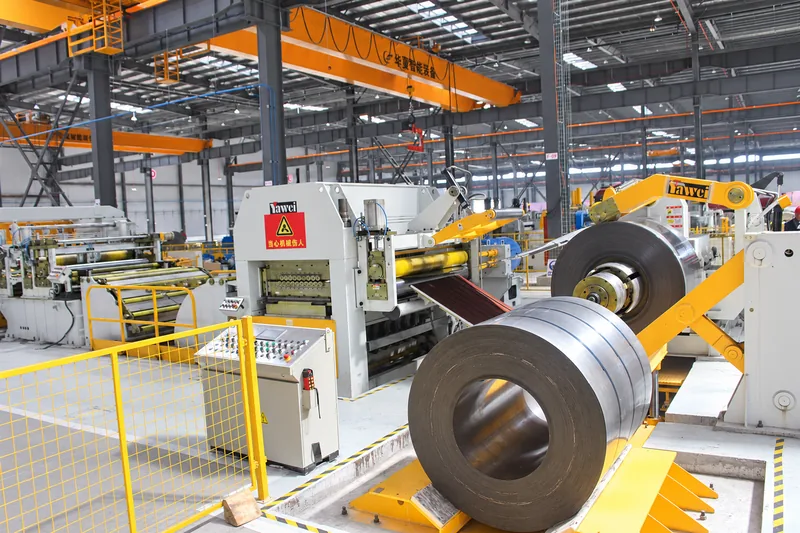
Specifying slit coils: what to put on the purchase order
Most problems with slit coils come from requirements that were assumed but never written down. This checklist covers the dimensions and coil details to agree before slitting starts.
Read moreHow grain-oriented electrical steel is made: the production route step by step
Grain-oriented steel owes its low core loss to a long, tightly controlled route. Knowing the main steps helps buyers read mill certificates and understand why grades differ.
Read moreHS codes for electrical steel, laminations and cores
Using the right customs heading avoids delays and wrong duty rates. The Harmonized System splits electrical steel by grain orientation and width, and treats laminations and cores as parts.
Read more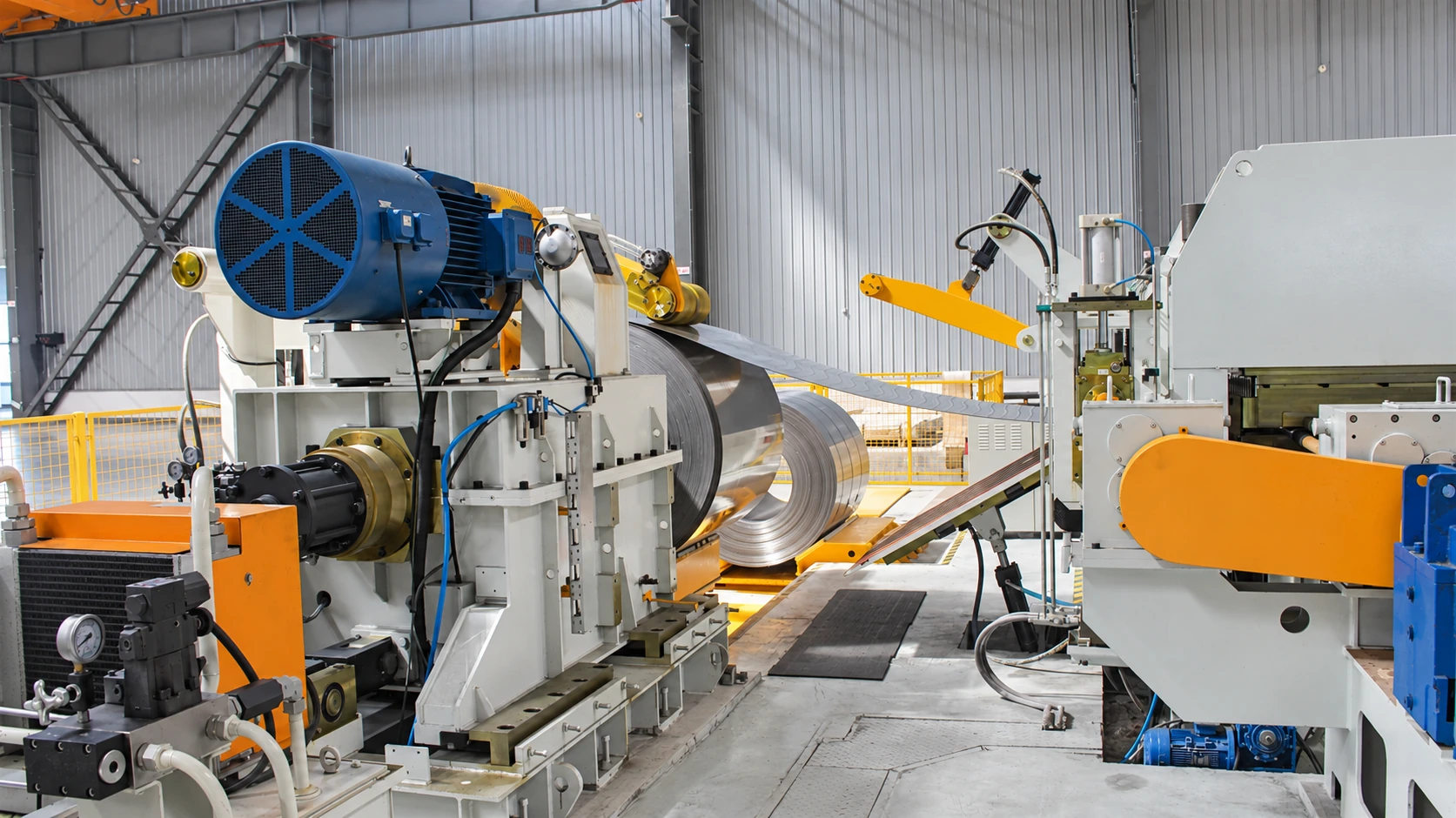
Slitting electrical steel: width, burr and edge quality
Most electrical steel is slit before it is cut or stamped. Width accuracy and burr height decide how well the strip feeds, how tightly cores stack and how much loss the edges add.
Read moreHow to read an electrical steel mill test certificate
The mill test certificate is the document that links each coil to its measured properties. This guide explains the fields that matter and what to check before the coil goes into production.
Read more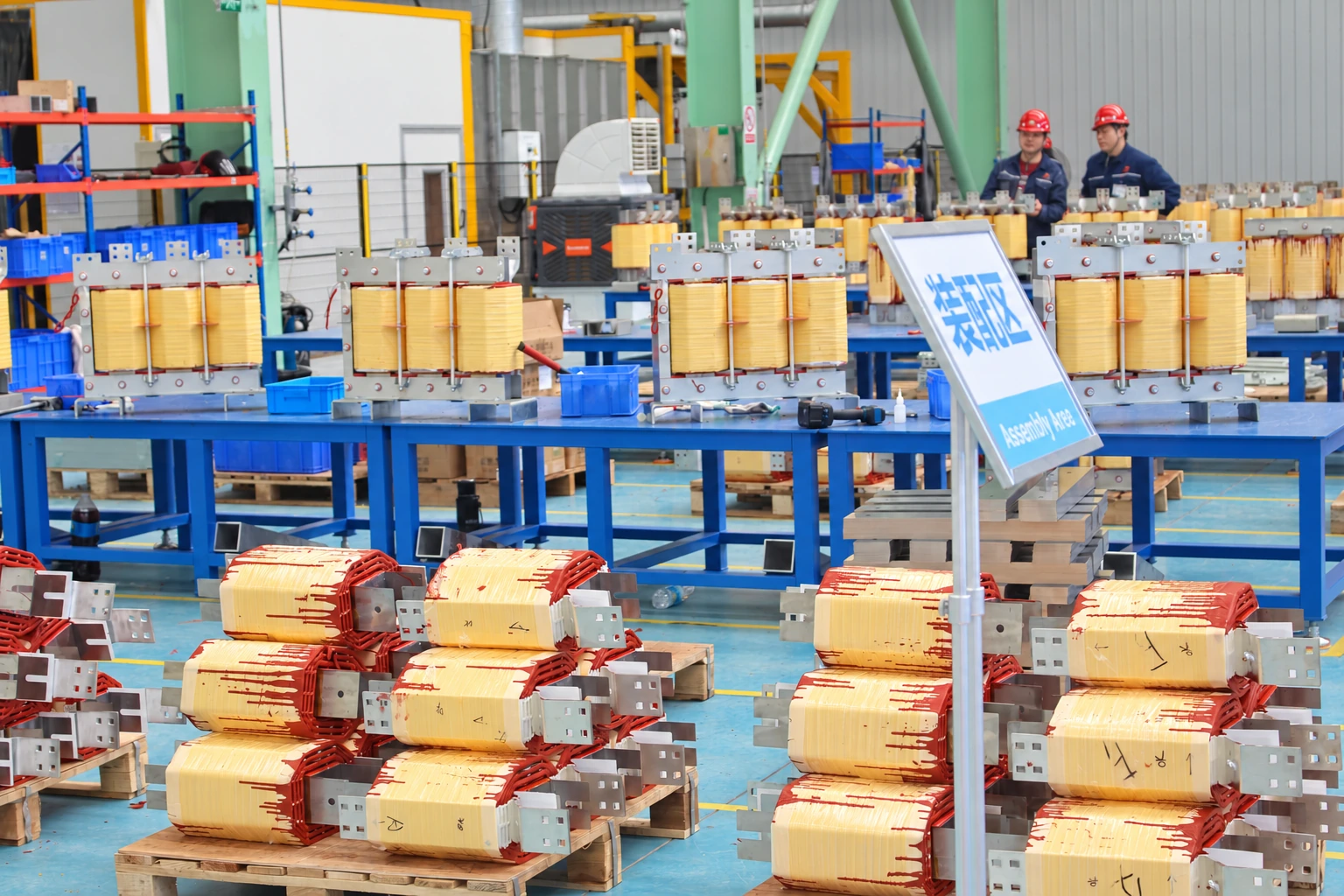
Choosing a grain-oriented grade for transformer efficiency class
Lower core loss means lower no-load loss. This guide compares Baosteel conventional, high-permeability and domain-refined grain-oriented grades for transformer cores.
Read moreGrain-oriented or non-oriented: which electrical steel do you need?
Grain-oriented steel is made for flux in one direction, non-oriented steel performs the same in every direction. The application decides which one you need.
Read moreHow to read electrical steel grade names
How to read Baosteel grade names such as B23R080 and B35A270, and how they compare with Nippon Steel, JFE, POSCO, GB/T, EN and JIS designations.
Read moreBaosteel electrical steel: grades and purchasing reference
Review Baosteel grades and technical information alongside batch documents and order acceptance requirements.
Read moreBusiness inquiries
Guangzhou Huaxin Industrial Co., Ltd

