


How grain-oriented electrical steel is made: the production route step by step
Grain-oriented steel owes its low core loss to a long, tightly controlled route. Knowing the main steps helps buyers read mill certificates and understand why grades differ.
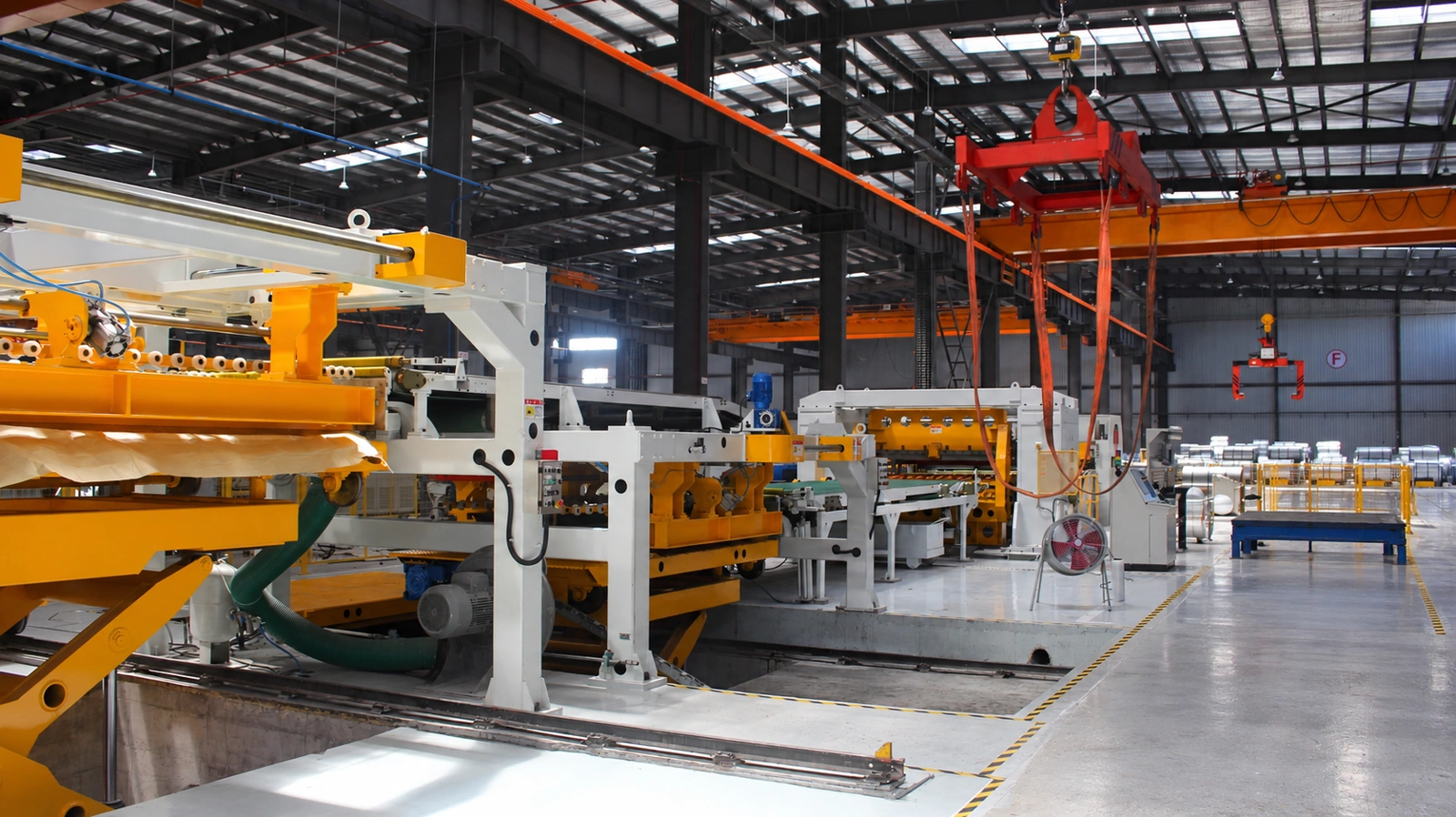
Grain-oriented (GO) electrical steel is one of the most process-intensive flat steel products. Its key property, a very low core loss when magnetised along the rolling direction, is created step by step: chemistry in the melt shop, grain structure in the rolling and annealing lines, and finally the insulating coating and, for the lowest-loss grades, magnetic domain refinement. This article follows a typical integrated-mill route from hot metal to finished coil.
1. Iron and steelmaking: getting the chemistry right
The route starts with hot metal from the blast furnace. Before it goes to the converter, the metal is desulphurised (for example by KR mechanical stirring), because sulphur and other impurities have to be kept within narrow limits. After converter (BOF) refining, the steel is treated in an RH vacuum degasser, where carbon, nitrogen and gas content are lowered and the silicon content—about 3 % for GO steel—is adjusted precisely. The small amounts of inhibitor-forming elements that later control grain growth are also set at this stage.
2. Continuous casting and hot rolling
The steel is continuously cast into slabs, reheated and hot rolled into strip, then coiled. Slab reheating temperature and hot-rolling conditions determine how the inhibitors are distributed in the strip, which in turn decides how well the later secondary recrystallisation will work.
3. Normalising, pickling and cold rolling
The hot band is normalised (annealed) and pickled to remove scale, then cold rolled to the final gauge—typically 0.23, 0.27, 0.30 or 0.35 mm—on a reversing cold mill. Thickness accuracy matters: the Baosteel product manual specifies ±0.02 mm for 0.23 mm and ±0.03 mm for 0.27–0.35 mm material.
4. Decarburising and high-temperature annealing
In decarburising annealing the carbon content is brought down to a very low level and the primary grain structure is formed. A magnesium-oxide based separator is applied, and the coils go into a long high-temperature batch anneal. Here secondary recrystallisation takes place: grains with the so-called Goss orientation grow and consume the others, which aligns the easy magnetisation direction with the rolling direction. The same anneal purifies the steel and forms the glass film on the surface.
5. Flattening, insulation coating and domain refinement
After annealing the strip is flattened under tension and receives its final insulation coating. Baosteel GO steel uses an inorganic coating with high interlaminar resistance that withstands 800 °C stress-relief annealing. For the lowest-loss grades, the surface is then treated to refine the magnetic domains. In Baosteel naming these are the R series (for example B23R080), while P is high-permeability (Hi-B) steel and G is conventional GO steel.
Baosteel: the scale behind the route
Baosteel, our main source, runs this route at industrial scale. After a new line at its Baoshan base in Shanghai went into full production on 13 June 2024, Baosteel’s annual grain-oriented capacity rose from 1.00 to 1.16 million tonnes, the largest in the world (Jiefang Daily via shanghai.gov.cn; Securities Times). On 25 June 2024 Baosteel launched four new grain-oriented grades—B23P080, B20HS070, B18HS075 and B18HS070—aimed at the most efficient transformers.
6. Slitting, packing and certification
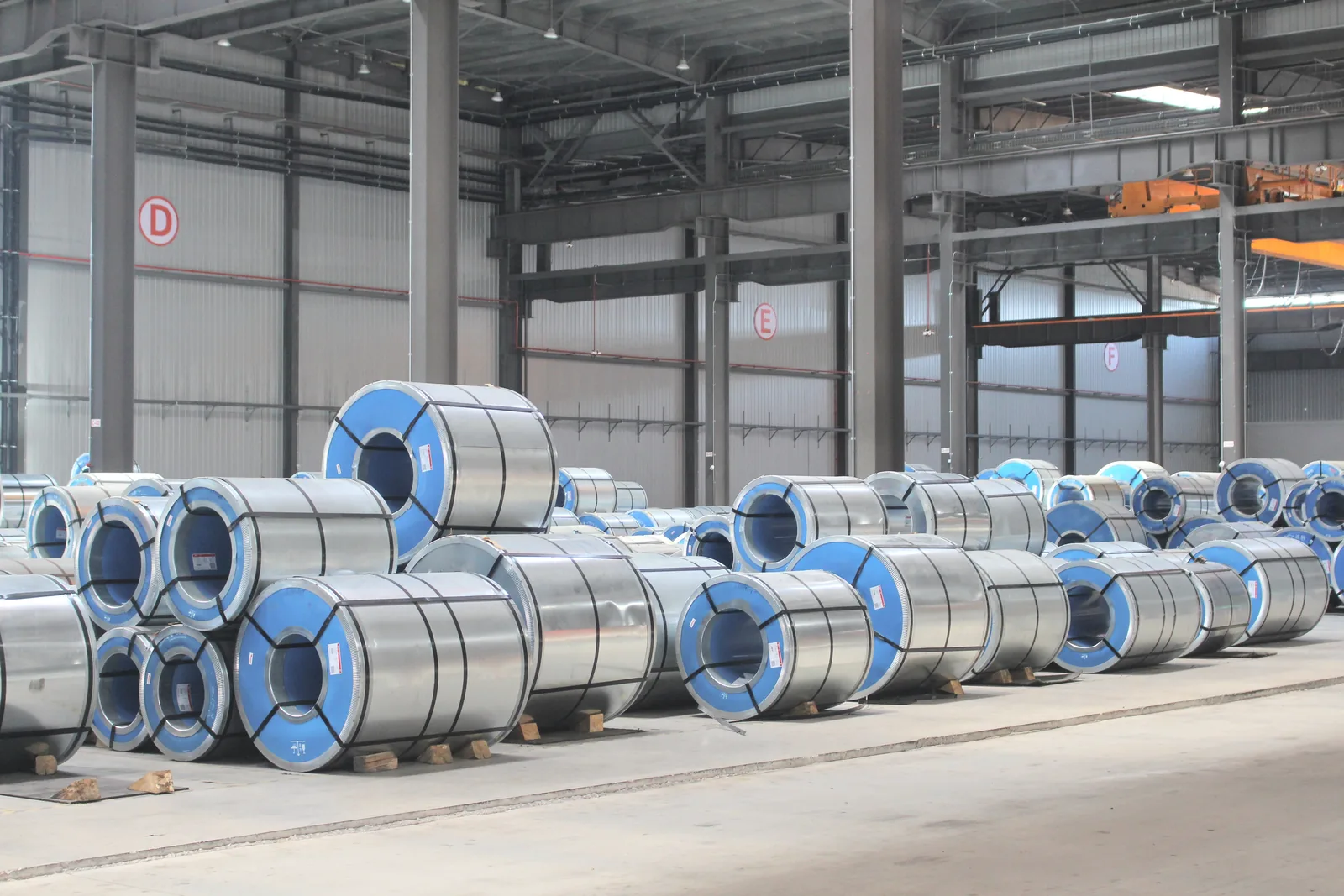
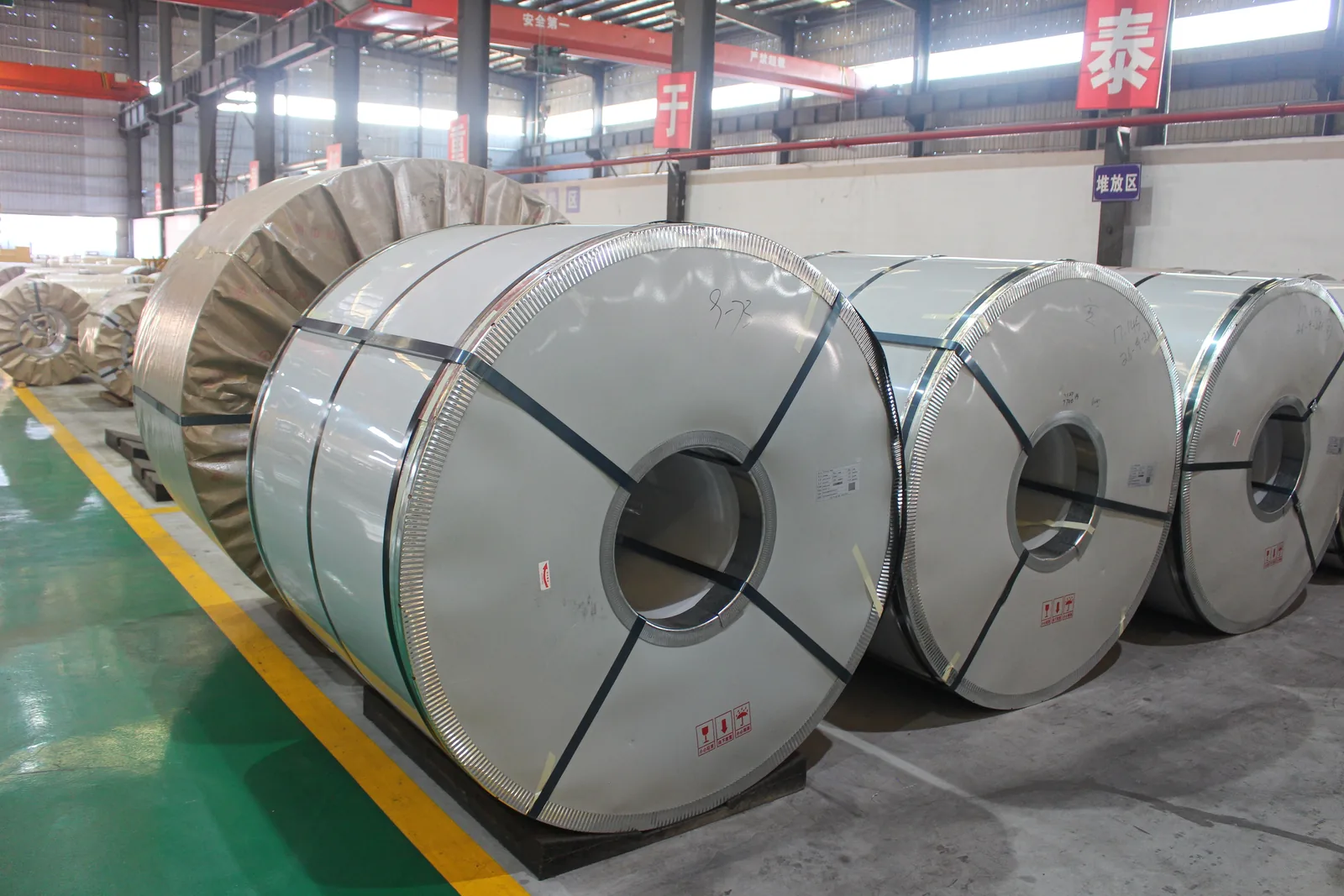
Finally the master coils are cut into delivery coils, packed and released with a mill certificate that lists the measured core loss and magnetic induction of the lot. Baosteel GO is supplied in widths of 900–1200 mm with a 508 mm coil inner diameter; narrower strip for transformer cores is produced by downstream slitting, which is where HXES processing begins.
What this means for buyers
- The grade letter tells you the process route: G conventional, P high-permeability, R domain-refined.
- Guaranteed values on the certificate are maximum core loss at 1.7 T, 50 Hz and minimum B8; typical values are lower but not guaranteed.
- Domain-refined grades should not be stress-relief annealed at high temperature unless the mill confirms the grade is heat-proof, because the refinement effect can be lost.
- Ask for the mill certificate with every lot and keep the coil numbers through slitting, cutting and stacking.
If you are comparing grades for a transformer project, send us the rated power, core design and target losses. We will suggest suitable Baosteel grades and confirm availability with the current quotation.

